

Dry mouth, also called xerostomia, can affect comfort, sleep, breath freshness and long-term oral health. Although the best treatment depends on the underlying cause, many people can improve their symptoms with the right combination of saliva-stimulating products, moisturizing treatments, practical home care and good oral hygiene.
This guide explains the main treatment options for dry mouth, including lozenges, saliva substitutes, natural remedies and strategies that help protect the mouth from irritation, acidity and bad breath.
What Is the Goal of Dry Mouth Treatment?
Dry mouth treatment is not only about making the mouth feel less dry. The goal is also to support the protective functions of saliva. Saliva helps wash away food particles, neutralize acids, reduce bacterial buildup and protect the teeth and soft tissues of the mouth. When saliva is reduced, people may experience discomfort, bad breath, a coated tongue, throat dryness and an increased risk of cavities or gum problems.
For some people, dry mouth is occasional and mild. For others, it is chronic and linked to medications, medical conditions or cancer treatment. In both cases, treatment usually focuses on one or more of the following: stimulating natural saliva flow, replacing moisture, reducing irritation and protecting oral health.
1. Saliva-Stimulating Treatments
When the salivary glands are still able to function, one of the most useful treatment approaches is to stimulate natural saliva production. This can help relieve dryness while also supporting the mouth’s own defense system.
Common saliva-stimulating options include:
- Sugar-free gum or sugar-free candies: Chewing and sucking can encourage saliva flow.
- Xylitol-containing products: Xylitol may help stimulate saliva and is also useful because oral bacteria do not readily convert it into enamel-damaging acids.
- Dry mouth lozenges or oral-adhering discs: These dissolve gradually and can provide longer-lasting relief than a quick rinse or sip of water.
Nighttime dry mouth is often particularly troublesome because saliva production naturally decreases during sleep. Slow-dissolving products may be helpful because they can provide moisture and stimulation over a longer period rather than only a few minutes of relief.
2. Saliva Substitutes and Artificial Saliva
Saliva substitutes, often called artificial saliva, are designed to add moisture and make the mouth feel more comfortable. They are usually available as sprays, rinses or gels. These products do not restore normal salivary gland function, but they can help reduce dryness and irritation.
Artificial saliva may be especially useful for people with more persistent or severe symptoms, including those whose salivary glands are less able to respond to stimulation.
Possible benefits include:
- Moisturizing the mouth and oral tissues
- Reducing discomfort from dryness
- Making speaking and swallowing more comfortable
- Providing temporary relief during the day or at night
However, saliva substitutes also have limitations. Some sprays and gels provide only short-term relief and may need frequent reapplication. Because of this, many people use them together with other strategies rather than relying on them alone.
3. Natural and Home Remedies for Dry Mouth
Simple daily habits can make a meaningful difference, especially when dry mouth is caused or worsened by lifestyle factors or environmental conditions.
Helpful home-care measures include:
- Drink water regularly: Staying hydrated is one of the simplest ways to reduce dryness.
- Limit caffeine if it worsens symptoms: For some people, too much caffeine can contribute to dehydration or a drier mouth.
- Avoid tobacco and reduce alcohol use: Both can irritate and dry the mouth.
- Use a humidifier: Moistening dry indoor air may help, especially at night.
- Breathe through your nose when possible: Mouth breathing can significantly worsen oral dryness.
- Maintain excellent oral hygiene: Brushing and flossing regularly helps reduce the complications of dry mouth.
These measures do not cure the underlying cause of dry mouth, but they can help improve comfort and reduce the risk of secondary problems.
4. Treating Dry Mouth and Bad Breath Together
Dry mouth and bad breath often occur together. This is because saliva helps cleanse the mouth and wash away dead cells, food particles and bacteria. When saliva flow decreases, these materials remain in the mouth longer and can contribute to unpleasant odors.
For that reason, effective dry mouth treatment often helps improve bad breath as well. Increasing oral moisture, stimulating saliva flow and maintaining thorough oral hygiene are usually the most practical first steps.
Treatment may help by:
- Reducing bacterial buildup
- Washing away odor-causing debris more effectively
- Keeping oral tissues more comfortable and less sticky
- Freshening the mouth while supporting saliva flow
If bad breath continues despite treating dry mouth and maintaining good oral hygiene, a dental or medical evaluation may be appropriate.
5. Why Oral Acidity Matters
Dry mouth treatment is not only about moisture. The acidity level of the mouth also matters. When saliva is reduced, the mouth may become less able to neutralize acids. A more acidic environment can weaken enamel and support the growth of harmful bacteria.
This is important because saliva normally helps maintain a healthier oral pH balance. Supporting that balance may help reduce the risk of tooth damage and discomfort, especially in people with chronic dry mouth.
Practical ways to help protect oral health include:
- Using saliva-stimulating products when appropriate
- Maintaining good oral hygiene
- Avoiding frequent exposure to irritants that worsen dryness
- Choosing dry mouth products that are designed with oral health in mind
People with persistent dry mouth may be more vulnerable to cavities and enamel problems, so protecting the oral environment is an important part of treatment.
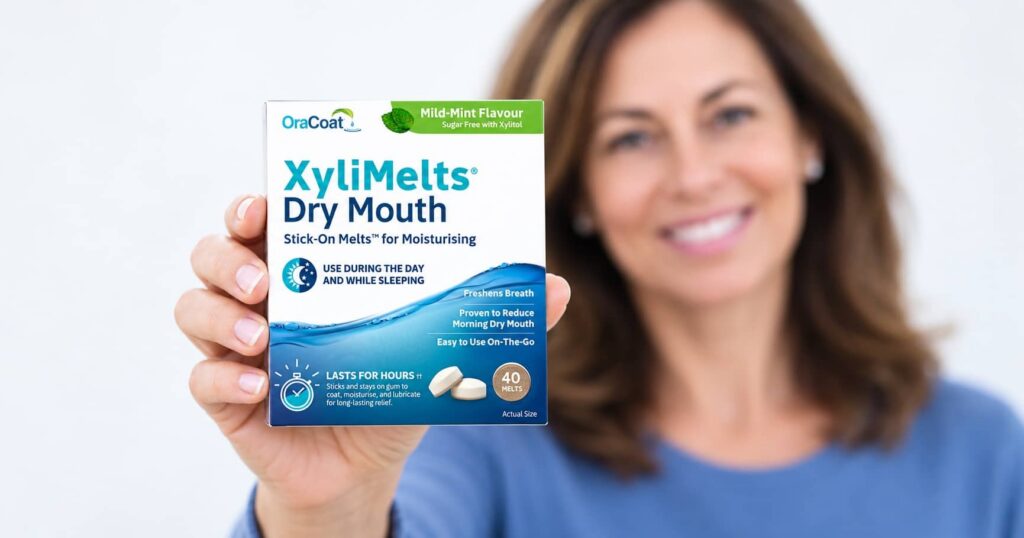
6. Long-Lasting Nighttime Relief with OraCoat XyliMelts
For people who need longer-lasting relief, especially overnight, OraCoat XyliMelts can be a practical option. Unlike products that give only brief relief, XyliMelts are designed to adhere inside the mouth and dissolve gradually over time.
Their key benefits include:
- Long-lasting moisture: Useful for people whose symptoms are worse at night.
- Xylitol-based formula: Helps stimulate saliva when the glands are still functioning and supports oral health.
- Convenient use: Designed to stay in place while slowly dissolving.
- Fresh breath support: By improving oral moisture, they may also help with bad breath linked to dry mouth.
XyliMelts are intended to help manage symptoms, not cure the underlying cause of xerostomia. They may be used as part of a broader dry mouth care routine that also includes hydration, oral hygiene and professional advice when needed.
7. Building a Practical Dry Mouth Treatment Routine
Many people benefit most from combining several treatment methods rather than relying on only one product. A simple routine may include:
- Drinking water regularly during the day
- Using sugar-free gum or xylitol products to stimulate saliva
- Applying saliva substitutes when extra moisture is needed
- Using a long-lasting nighttime product if symptoms interfere with sleep
- Keeping the mouth clean with regular brushing and flossing
- Reducing triggers such as tobacco, alcohol or persistent mouth breathing
The right combination depends on the severity of symptoms and their underlying cause.
When Should You Seek Professional Advice?
Occasional dry mouth is common, but persistent or worsening symptoms should be evaluated. It is a good idea to speak with a dentist or healthcare professional if dry mouth:
- Lasts for weeks or becomes more severe
- Interferes with eating, speaking or sleeping
- Is accompanied by frequent cavities, gum irritation or oral infections
- Begins after starting a new medication
- Occurs together with dry eyes, burning sensations or major changes in oral comfort
Medical or dental assessment is especially important when dry mouth may be linked to chronic illness, medication side effects or cancer treatment.
Final Thoughts
There is no single best treatment for every case of dry mouth. Some people mainly need better hydration and home care, while others benefit from saliva substitutes, saliva stimulants or longer-lasting products for nighttime relief.
The most effective approach is often a combination of strategies that improve comfort, support saliva, reduce bad breath and protect oral health. OraCoat XyliMelts can be a useful part of that plan, particularly for people looking for steady relief during sleep or throughout the day.